I had been waiting at this lagoon for a while, Otters fish here and I had come out hoping to catch that, but the one that showed up was not interested in the water. It hauled out on the dry sand a little way off, curled into itself, pushed a small berm of sand up against its face.
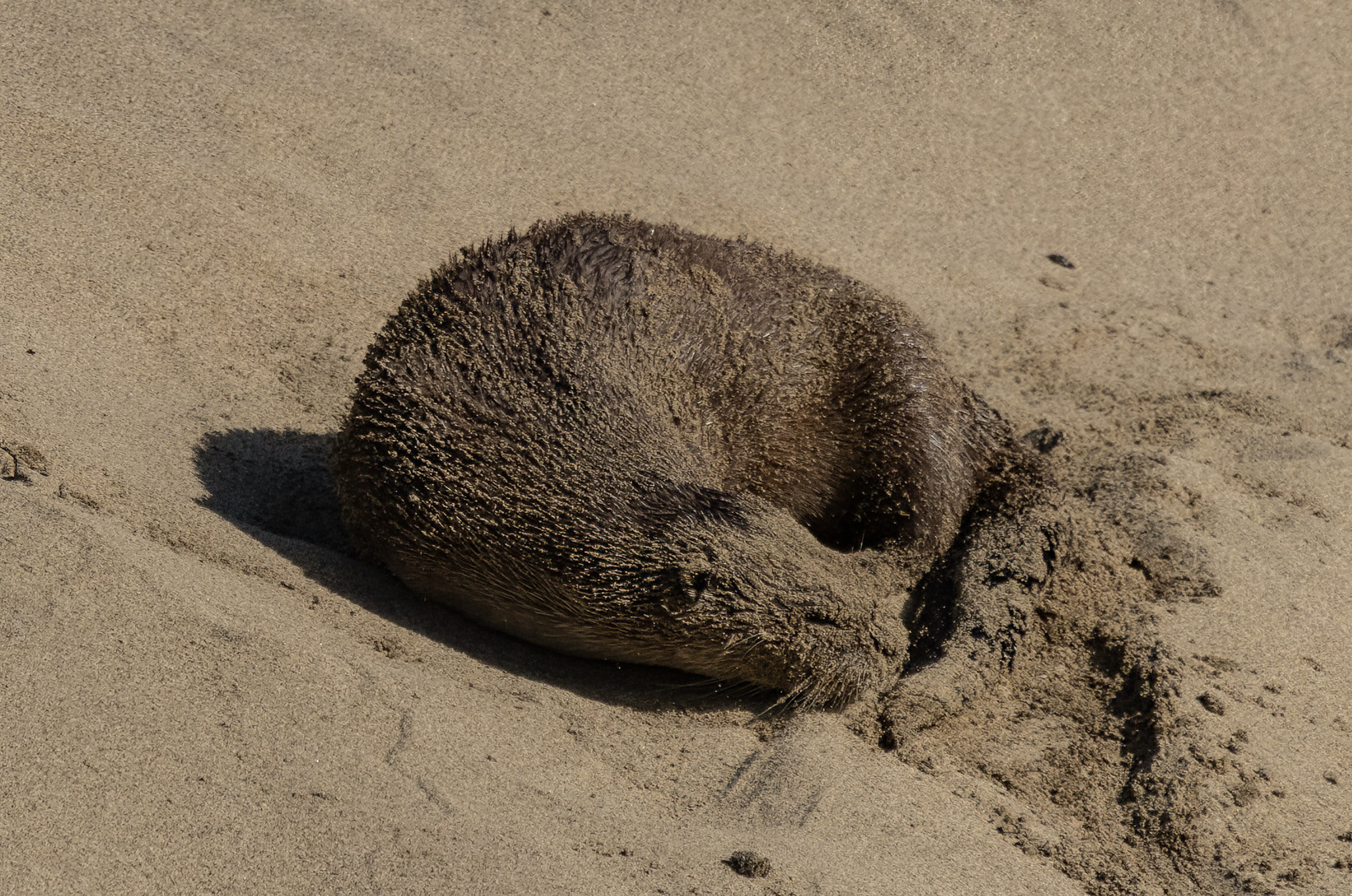
Every so often it would twist onto its other side, rub its head into the sand, and settle again.
Otter grooming
A river otter's fur is doing most of the work that blubber does for a seal. There are two layers, a dense underfur and a set of longer guard hairs, and between them the coat traps a layer of air that keeps cold water off the skin. If that trapped air breaks down, either because the fibres clump together or because oil and dirt from the last swim have collected on the surface, the otter starts losing heat much faster than it can replace it.
Rolling on dry ground is one of the main tools they have for this. When an otter climbs out of the water and works itself into loose sand, the sand pulls moisture out of the coat by capillary action and scrapes against the guard hairs as the animal twists around, lifting off oils, bits of algae, dried scale, and anything else that has stuck since the last groom. The abrasive action also disturbs external parasites like fleas and ticks, which either get scraped free with the debris or are made uncomfortable enough to leave. Once the coat is clear the otter can comb it through with the claws and re-fluff the underfur so it holds air again.
Most populations end up with regular rolling sites along their range, patches of dry sand, matted grass, or worn earth just above the waterline that get used again and again. The same spots often double as latrines and scent posts, which is why the behaviour reads as territorial as well as hygienic.
About the photograph
Most encounters are at dusk in the water with only the head above the surface, this was at mid-day, so exposure is fighting glare on wet fur against a darker background. Here the whole animal was dry, on a matte surface, in even light, and the shape it had folded itself into let the low sun rake across the coat and pick up the individual guard hairs.