We drove down to La Junta for the day to try and catch the tarantula migration. For a few weeks every autumn, mature male tarantulas leave their burrows and walk across the plains in southeast Colorado looking for females.
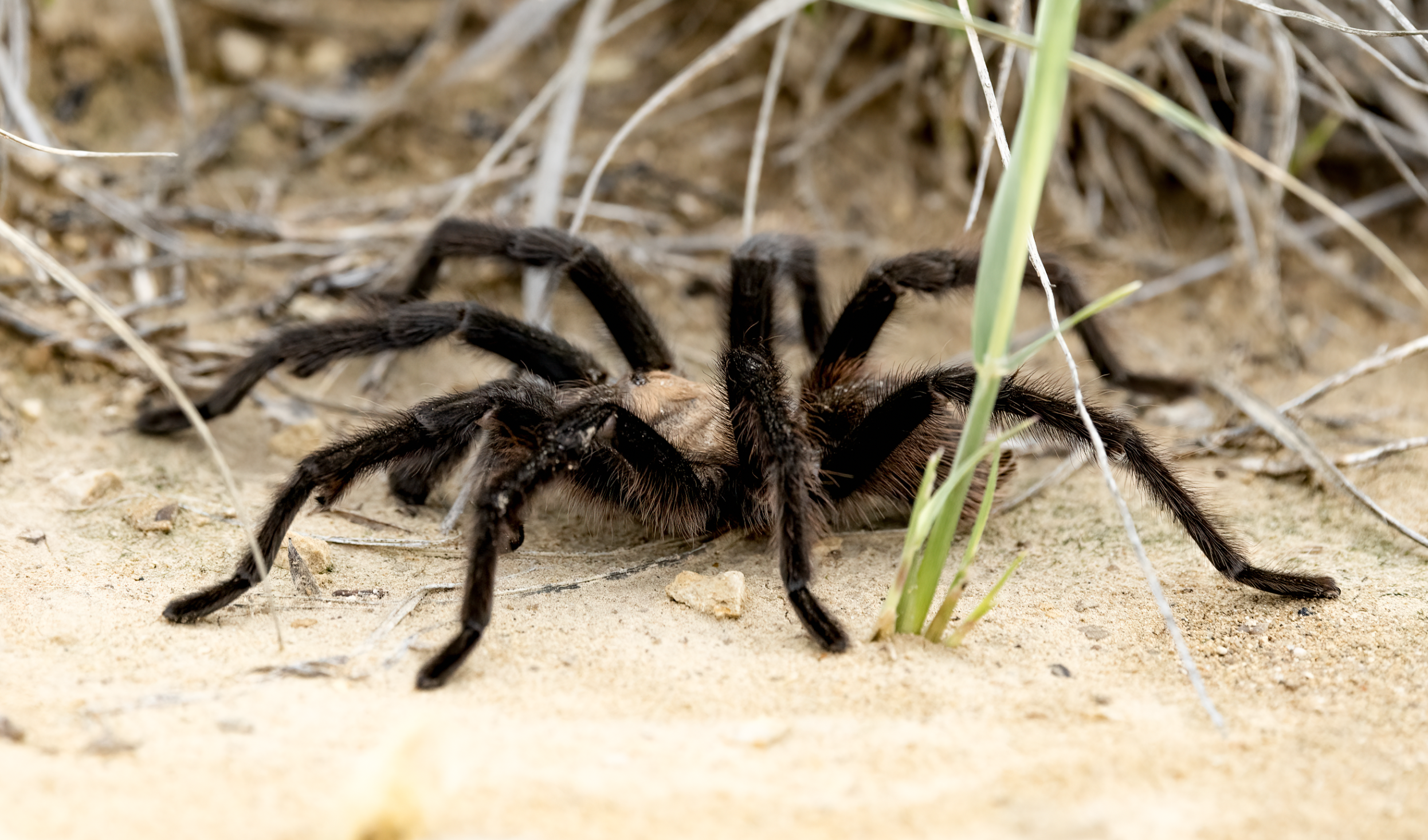
We saw a few. Then a storm rolled in, hard and fast.
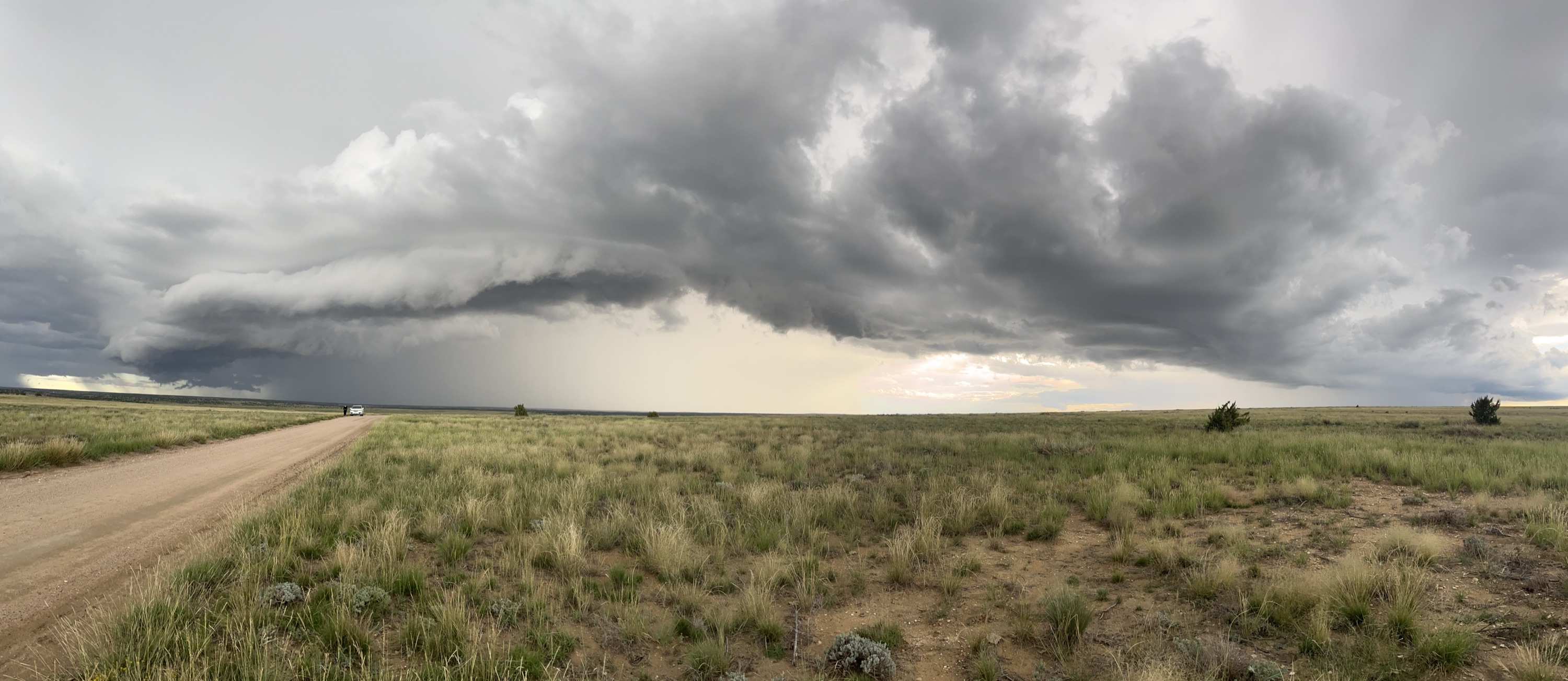
After it passed we didn't see any more.
What I read about them
The males wandering across the road aren't migrating in the biological sense. Each one has lived almost its entire life inside a single silk-lined burrow, waiting for prey. After seven to ten years of that it reaches sexual maturity, grows the hooks on its forelegs it uses during mating, loses interest in food, and leaves the burrow for the first and last time to find a female. If it mates it usually dies within weeks. If it doesn't, the first proper cold snap finishes it.
The window around La Junta lands in late September and early October because females are still active in their burrows and the days are cool enough that the males can be out in the open. They walk mostly in the afternoon and evening, in roughly straight lines, with poor eyesight and almost no way to find a mate except by covering ground and picking up silk draglines around a female's burrow.
Rain is bad for them. Their book lungs don't deal well with wet conditions, and wandering males can't dig fresh burrows for shelter. Whether the ones we didn't see later were holed up somewhere or didn't make it isn't something I can say.
About the photographs
The spider was fully stopped, which does not happen often. The storm photograph is a phone panorama, forgot to bring my landscape lens.